

Satellitten: Gen Z vælter Nepals regering
Med Satellitten åbner vi et vindue til hverdage og virkeligheder langt fra redaktionen. Endnu et signal er landet.
Mens du læser dette, kredser vores SEINellitter rundt i verden. De er unge iagttagere, der sender deres perspektiver hjem til redaktionen fra andre lande og virkeligheder. Satellitten er et format, hvor vi giver mikrofonen til dem, der ser verden fra en anden vinkel. Det er ikke breaking news, eller diplomatiske analyser, men hverdagsglimt og fortællinger fra steder, du ellers ikke ville nå.
Følg med Binesh til Nepal, hvor unge samles til en såkaldt Gen Z protest, der startede i kommentarsektioner på sociale medier og endte med at vælte Nepals regering. Nu skifter vi over til engelsk, og giver mikrofonen til Binesh.
“The revolution will not be televised”, a famous line from Gil Scott-Heron`s song, still holds the same meaning. But thankfully, social media now plays that role. Nobody expected that a simple online trend, calling out politicians’ children for living in luxury while many people struggled, would eventually bring down the government.
Politicians feel targeted and ban Social Media
On September 4, 2025, Nepal’s government banned 26 social media platforms, saying it was because they weren’t properly registered. But just days earlier, the “Nepo Kid” trend had been spreading like wildfire on many of those same platforms.
Under the former Prime Minister, KP Sharma Oli, sites like Facebook, Instagram, Twitter, and YouTube were all blocked. Still, people found ways around the ban using VPNs (Virtual Private Networks) and DNS (Domain Name System) servers to stay connected.
While the government was entirely focused on banning, there had been murmurs of protests in the comments sections of every viral post. Many people wanted to join, but there were no clear leaders to organize the protest. Nonetheless, many social media influencers, with thousands of followers, came forward and asked people to join the demonstration.
Plus, a significant part was played by Sudan Gurung and the Hami Nepal team, a non-profit organization. Since the group had been actively participating in good causes in the past, they also took the initiative to volunteer in the ongoing protest. From forming a medical team for assistance to teaching how to protest, the Hami Nepal team played its part well.
Let the protest begin
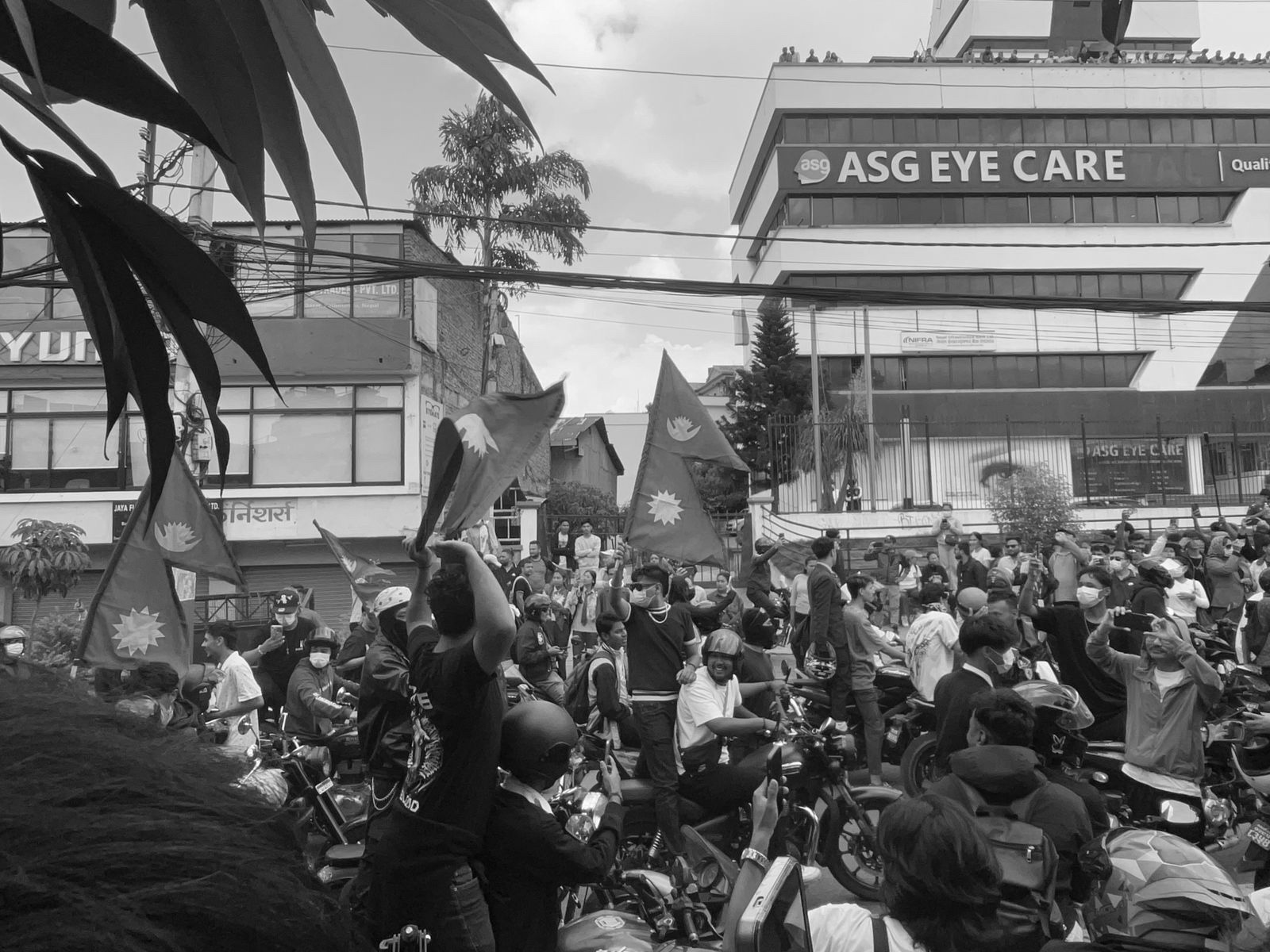
On September 8, 2025, thousands of young people took to the streets to voice their opinion against the government’s decisions. Many were in their college uniforms, holding signs, placards, and banners, clearly displaying their message. Though said to be a Gen Z protest, people of all age groups were present. Though said to be a Gen Z protest, people of all age groups were present.
While multiple global news outlets claimed that the protest was primarily caused by the social media ban, this was just a mere tip of the iceberg. People were protesting against the government’s corruption, unaccountability, and misjudgment, among many other faults. The banners had slogans such as: “tax sucker”, “enough is enough” and “let’s break the corruption”.
The protest that seemed peaceful turned south quickly. While not guaranteed, there were reports that members of other political parties may have interfered. When some protesters tried to enter Nepal’s parliament building, shots were fired. Clashes erupted, and sadly, by the end of the day, 19 people had lost their lives. Seeing this, Ramesh Lekhak (now-former Home Minister) resigned. Later that day, the government lifted the social media ban.
Looking at the rising number of people, even the police raised their hands and surrendered
From Protest to Chaos
The protest was further fueled after the tragic deaths and continued the next day, September 9, 2025. The protesters had clear demands: accountability and justice. However, things were not looking good. As the security was tightened, thousands started marching towards the parliament building. More so, bullets were flying, tear gas was thrown, and water cannons were used to control the protestors. However, nothing stopped the protesters.
In the middle of the chaos, many got shot, injured, and some broke limbs. Nonetheless, looking at the rising number of people, even the police raised their hands and surrendered. And after a couple of hours, the protesters were successful in capturing the parliament building.
Seeing how things were turning out, KP Sharma Oli had no other option but to resign. So he submitted his resignation to President Ram Chandra Poudel and fled his official residence in Baluwatar, along with his wife, Radhika Shakya, and his secretary.
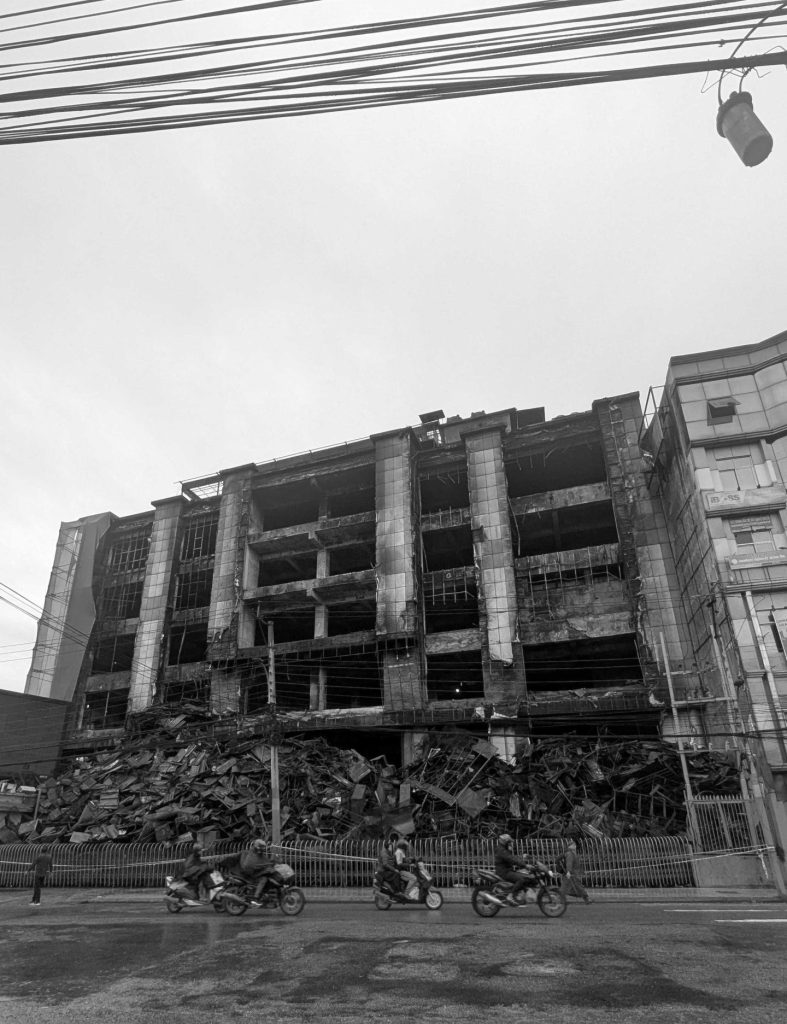
But what unfolded next was what many Nepalese had not expected. People started torching government buildings, including the Supreme Court, Singha Durbar (headquarters for numerous offices and ministries of the Nepali government), politicians’ homes, and media outlets nationwide. Additionally, Bhat-Bhateni (Nepal’s largest retail supermarket and departmental store chain), Hilton Hotel, and Bagaicha Hotel, which were said to have an affiliation with political leaders, among many other places, were vandalized or burnt down. Unfortunately, multiple prisons broke free as well, and thousands of inmates fled.
What the youth want
Later in the evening, the Nepali Army finally intervened, deployed troops and announced they’d help maintain order. While doing so, they also asked Gen Z to send their representatives to have talks with the President.
The Gen Z representatives demanded dissolution of parliament, mass resignations of corrupt politicians, and new elections to establish governmental accountability and end systemic corruption and nepotism.
With the dissolution of parliament, the nation found itself in desperate need of leadership, and that’s when Discord, a communication platform, emerged as a space for political discussion. Hami Nepal had created a Discord server called Youth Against Corruption, with different channels like Fact Check, News Dump, and Discussion Hub, among others. They shared updates and information from their other social media pages, and the server quickly became quite active.
When it came time to talk about who should be appointed as the new leader, a lot of names came up. People debated for hours, talking about what kind of leadership Nepal really needed. After a long discussion and plenty of back-and-forth, 50% of the votes agreed that Sushila Karki was the right choice to become the new Prime Minister.
And on September 10, 2025, Nepali Gen Z protesters proposed Sushila Karki as a viable candidate. Just two days later, on September 12, 2025, she was appointed as the interim Prime Minister of Nepal.
As the family members make a house a home, it is we who make Nepal, Nepal.
A Change Will Come?
The plots of how the Nepali politics’ dynamics changed in almost two days were surreal. However, this situation had been building up for some time. Seeing how Nepal experienced significant political instability over the last decade, and having seen around 14 governments since 2008, many got impatient. Moreover, no single government has been able to complete a full five-year term.
So there needed to be a change, and a significant change did come. Well, again, there was a harsh reality. The task didn’t just finish by appointing a new PM; there is much to do.
The thing is, we are here, and still are, easily fooled and manipulated. As the family members make a house a home, it is we who make Nepal, Nepal. If only there were unity among the people. Sadly, it’s still surprising to see how people are prone to political parties, incapable of seeing their wrongdoings. So to tackle that, another trend was started, “Jholey Trend,” to call out people who blindly support incapable leaders.
Jholey is a word inspired by the word jhola, which means bag in Nepali. In Nepal, a “Jholey” is a term for someone so fanatically devoted to a political party that they act as blind loyalists, often relied upon by parties for tasks like rallying support or spreading propaganda. While, at times, Jholeys depend on these parties for financial gain or other benefits, reflecting a mutually dependent relationship.
But even with this victory, amid all the chaos, Gen Z got a bad reputation. They were portrayed as villains by many, although they weren’t the only generation on the streets. Members of other parties took advantage of the situation, and many people escaped their wrongdoings in the name of Gen Z’s protest.
Many are still waiting for justice, a change, wanting the sacrifices not to go in vain.
This shows how Social Media can unite people and inspire change if you know how to use it to your advantage. And Gen Z certainly does. So pay attention to the next online trend; it might just be a sign of something bigger ahead.
Er du selv ude i verden og ser ting, vi andre ikke ser?
Så vil vi gerne høre fra dig. Send dine indtryk, historier eller hverdagsglimt til nyheder@seinmag.dk.
Vi glæder os til at få verden fortalt af dig.
Tekst: Binesh Shrestha & Tilde Marie Bundgaard
Redaktør: Megan Vendelbo Owen
Billeder & lyd: Binesh Shrestha, Badal Ghising (Mani Dorze) and Rodina Maharjan
Visuel: Asbjørn Nonbøl
Great contribution. Really enjoy the last part, it gives a perspective, that you can’t get as a non native!